Yoga and Long Covid

Almost 2.5 million Australians have now had Covid-19.  According to research approx. 1/3 of these people would have reported symptoms of a condition called Long Covid (LC) or Post Acute Covid Syndrome (PACS).  Long Covid is the term for people that have ongoing symptoms after the virus left the body.

People usually have 3 symptoms for 6-8 months and 1 or 2 symptoms up to 12 months.  If your conditions do not get better see your Doctor as you might have other underlaying conditions.

While the long-term effects of the virus are not clear yet, researchers know that it can affect many different systems within the body such as the lungs, the heart, muscular – skeletal systems, kidney and cognition.

LC can cause shortness of breath, anxiety (physical and social), cough, fatigue, loss of concentration, change in skin texture, decreased immunity, and decreased nutrient absorption.  Except for the first three the symptoms, they are like symptoms for chronique fatigue syndrome. 

This suggests that recovery from LC might be slow, pace your day.

Yoga intervention needs to be personalized.

Tips for recovery from Long Covid:

Set priorities for your recovery but do not push yourself, be patient with your body and listen to it. Start with something simple like walking and gradually build up to where you were.

Change your position slowly (i.e. from laying to standing).

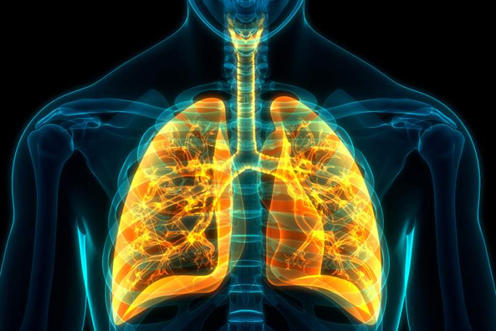
Sitting on a chair visualise the breathing process, inhaling and exhaling through your nose.  This will allow for the breath to be warmed and filtered before it gets to your lungs.  Imagine your lungs as a balloon as it fills with air. 

If you need to stay in bed do not lay on your back all day.  It is preferable to lay on your side or on your anterior body.

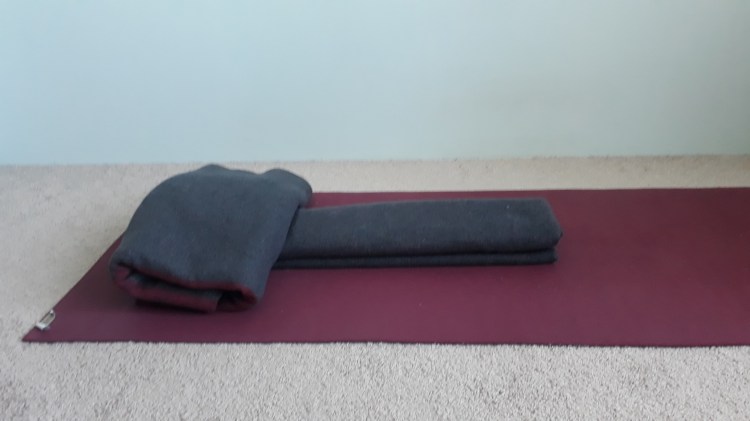
If your joints ache and want to practice on your mat, place a towel on your mat to make it softer.

Muscles need movement and even if you have aches and pains do some simple movements every hour to mobilizise the joints.  It is recommended that initially do a few poses laying on the mat – see a short sequence at the end of this blog.

Keep your routine for eating and going to sleep.

Hydrate with water.

Introduce standing poses to your practice slowly.

Reduce electronic media, use audio books instead.

Rest in prone or semi prone positions.

Begin / re-introduce standing poses carefully.

Short yoga sequence to mobilize the body:

Lay on your back, place a rolled-up blanket under your neck.  Roll the head right to left and to the other side.

Extend right arm on the floor as you open the chest.  If it is comfortable turn your head either to the right or left. Repeat the other side

Bend one leg and rotate the ankle 4-5 times, do it with the other leg.

Bend and extend one leg up (towards vertical), use your hands behind the thigh to support the leg.  Repeat with the other leg.

Lay on your right side, head resting your bent right arm.  If you feel unstable bend the left leg.  When you ready extend and raise the left leg and left arm. Roll over to repeat on the other side.

Lay on your abdominal, rest your forehead on the floor.  Extend the right leg and raise it off the floor (keeping the hips aligned on the floor).  Next try to raise the torso and extend the right arm in front of you.  If you want to take this further raise the right leg, the torso and the right arm.  Repeat with the left leg and left arm.

If it is there for you come to kneel on the floor and try the ‘modified cat & cow’ pose. Place your hands are under your shoulders, knees are under the hips.  As you exhale sit back towards your heels, as you inhale come back to the starting position.

For calming effect try the humming bee breathing technique.

Instead of laying down in Savasana (the relaxation at the end of the practice) consider laying on your side, one leg bent and listening to a pre-recorded yoga nidra.

Wishing you a successful recovery from the symptoms of Long Covid!

Notes:

Loosely based on ‘Yoga and Log Covid’ workshop by Liz Williams form Yoga Therapy Institute (12.02.2022.) and Research from Mount Sinai Rehabilitation Hospital New York.

The recommended poses are general in nature, they do not take your other pre-existing conditions into consideration.  Seek the advice of an experienced yoga teacher or physiotherapist.
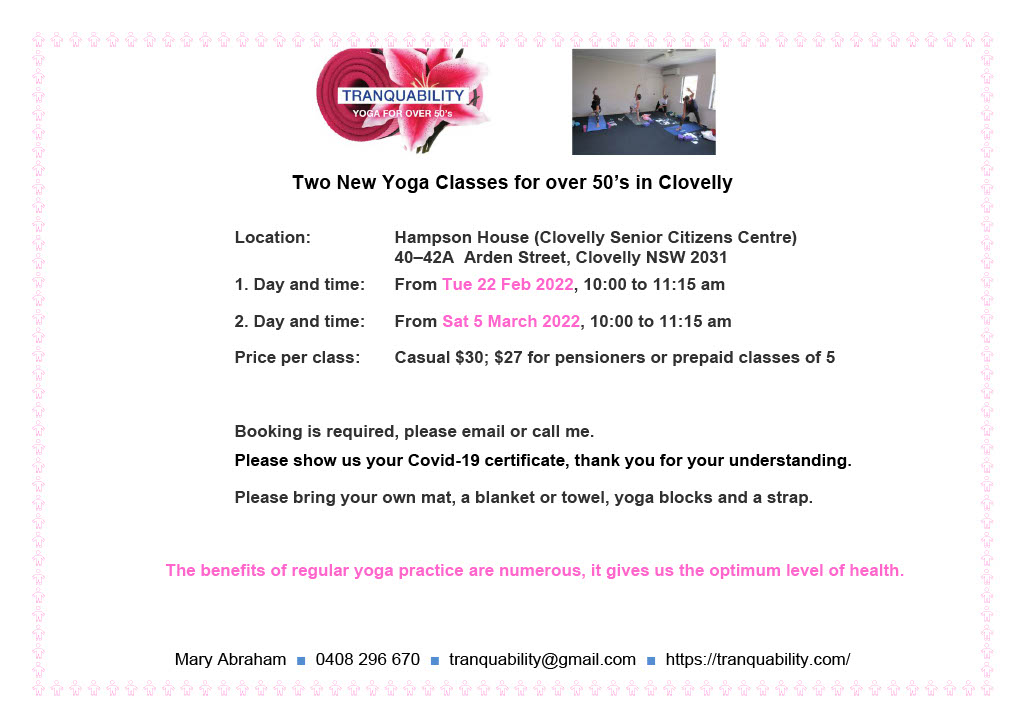
Two new Yoga classes for over 50’s to start in Clovelly

According to the ‘Physical activity and exercise guidelines’ older Australians should do at least 30 minutes of moderate intensity physical activity on most days.  The health benefits are numerous: it reduces the risk of high blood pressure, high cholesterol, type 2 diabetes, bone and joint problems, heart disease and some cancers.  It also helps to maintain a healthy weight, reduces the risk of falls and injury, improves sleep.

Yoga unites the body, breath and mind and it is the perfect vehicle to assist with the above.

The Tuesday class will start on 22 Feb 2022 – 10:00 -11:15 am

The Saturday class will start on 5 March 2022 – 10:00 -11:15 am

Booking is required as it is a small hall. Please have your Covid-19 vaccination certificate with you.

Beginners or experienced students are welcome. If you are recovering form injury or operation you are also welcome to practice chair yoga in the class.

Please contact me via email: tranquability@yogateachermary

New Yoga Class for over 50’s in Clovelly – starting Tue 22 Feb

According to the ‘Physical activity and exercise guidelines’ older Australians should do at least 30 minutes of moderate intensity physical activity on most days.  The health benefits are numerous: it reduces the risk of high blood pressure, high cholesterol, type 2 diabetes, bone and joint problems, heart disease and some cancers.  It also helps to maintain a healthy weight, reduces the risk of falls and injury, improves sleep.

Yoga is the perfect vehicle to help with the above.

To cater for those yogis who are available during the week we are starting a new class in the leafy suburb of Clovelly (Sydney’s East).

Location:           Clovelly Senior Citizens Ctre,  40–42A  Arden Street, Clovelly NSW

Day and time:    Weekly, from Tue 22 Feb 2022, 10:00 to 11:15 am

Price:                   Casual $30, $27 for pensioners or prepaid classes of 5

Small classes, booking is required, please email, or call me.

Please be fully vaccinated, thank you for your understanding.

Please bring your own mat, a blanket or towel, yoga blocks and a strap.

I have been teaching yoga to over 50’s, seniors and the not so supple for over eleven years.  I am looking forward to seeing you on a mat or chair near me! 

Please contact me if you have any queries and to book in. https://tranquability.com/contact/

For more information about the teacher please read: https://tranquability.com/about/

I am looking forward to seeing you on a mat near me!

Why do New Year’s resolution fail?

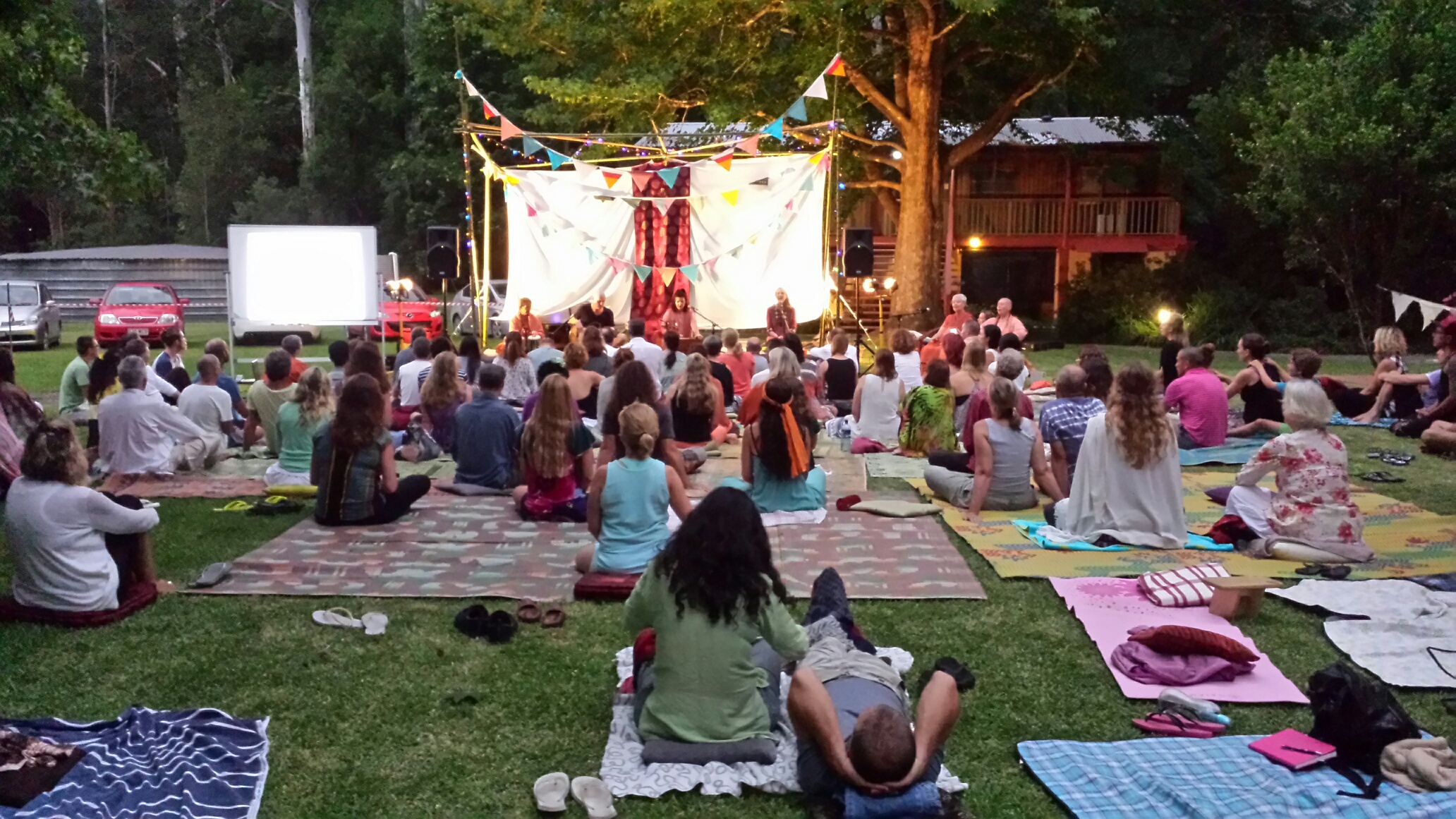
A few years ago I spent New Years Eve at Mangrove Yoga, which was a working ashram at the time.  Their teachings followed the Satyananda tradition. The wisdom from the night has stayed with me and I would like to share.

I was looking forward to the the fire ceremony, chanting, yoga classes, yoga nidra and good vegetarian food – and all my wishes were fulfilled.  

We were sitting on mats under the stars on a beautiful summer night.  One of the senior swamis asked the question: Why do New Year’s resolution fail?

nye2016123

WHY DO NEW YEAR’S RESOLUTIONS FAIL?Continue reading “Why do New Year’s resolution fail?”

Gratitude

What is the difference between gratitude and positive attitude? 

Gratitude dissolves the sense of lack which helps us overcome greed and lust.  It is being thankful for what we have.  The gifts in our lives become precious and we rejoice in what once seemed mundane.  This is more than a ‘glass half-full’ attitude; this is grateful for having a glass no matter how much is in it.

What to be grateful for?

Be grateful for your childhood, for your young years and adulthood and if appropriate for your incarnation.

Be grateful for this breath, not the last or the next one. Prana (lifeforce) moves around the body.

Let’s all be grateful for yoga, this path of love, wisdom and to our fellow yogis, teachers and their teachers before us – going back to over 4,000 years.

Reflection

With the end of another year effected by Covid-19 it is time to reflect on what we have learnt , what challenges allowed us to grow and what we are grateful for.

It is also a time to look forward to the future, with acceptance that uncertainty will also play a part and none of us has full control.  Understanding what give us joy (do more of it), what values do we want to integrate to our lives and how will we take care of ourselves.  Unless we are well, we are not able to service others in our community.

Consider spending five minutes a day to be thankful for what is good in your life and practice gratitude. 

Let the lights shine on your wall!

If you can breath you can do yoga

If you can breathe you can do yoga – and how lucky we are to practice!

The Western definition of breath is the air taken into or expelled from the lungs.

In yoga we have the term ‘prana’ which means lifeforce.  Prana is much more than breath, it is energy.  The ancient yogis advocated the practice of pranayama (sometimes translated as breath control) is to unite the breath with the mind.

Pranayama is the 4th limb or stage or the 8 limbs of yoga which was first written down over 2,000 years ago. It covers the journey of the student (we are all students) from beginner to experienced.

The importance of working with the breath in yoga cannot be overemphasized.  Avoid holding your breath in poses, something that can happen in when you are in an unfamiliar or new situation.  Just keep regulating your breathing throughout your practice.  Unless your nose is blocked, inhale and exhale through your nostrils.  You might notice that one nostril is more prominent, and it changes during the day

How to use the breath?

The effective way to breathe is to follow your instinct to inhale when you open the chest and to exhale when you compress your chest and abdomen.  For instance, when you stretch your arms above your head, inhale.  When you bend forward, exhale.  While staying in a pose, just breathe normally.

Simple breathing techniques (Pranayama)

Pranayama can practiced laying down or sitting in a comfortable pose where the spine is upright.  You might sit on a chair or roll up a blanket and place it under the spine and have a pillow under your head, so the head is higher than the chest and the chest is higher than the abdominal.  If you are using a folded blanket the tailbone is on the floor not on the blanket.

At the beginning of your yoga practice / class it is a good idea to connect with yourself and with your breath. 

Lie down and place your hands on your abdominal with the thumbs touching each other above the naval and the other four fingers below the naval.  Observe the rhythmical rise and fall of your abdominal. 

Then take your hands higher up to the sides of your ribcage, above your floating ribs.  The ribcage expands sideways and upwards. 

Experiment with moving your hands towards your shoulders.  Allow the fingers to touch your collarbones.  As you inhale allow the breath to travel from your abdominal to your thoracic area and then towards your shoulders.  The inhalation expands the frontal torso.  Exhale softly, from the top, and allow the breath to touch your back body.

Below are a couple of pranayama practices. 

If you get dizzy at any time, please return to your normal breath.

4:4

Inhale for the count of 4 and exhale for the count of 4.  Once you established this pattern try to lengthen your exhalation, try for the count of 5 or 6 or even longer.  Extending the exhalation helps to calm the mind.

Square breathing technique 4:4:4:4

Pranayama recognizes the state of ‘no breath’ or holding the breath between inhalation and exhalation and vice versa.  Try the following 4-square breathing technique.

Visualize a square in front of you.  Inhale for the count of 4 on the left vertical side of the square. Hold your breath as you ‘move’ across the top side of the square. Exhale for 4 on the right side of the square.  Hold your breath as ‘move’ across the bottom side of the square.  Repeat this process 3+ times and return to your normal breathing.

Enjoy the practice!

Meditation minimizes melt down

What is meditation?

Meditation (the uninterrupted flow of concentration or one pointed attention) is the seventh limb or stage of the eight limbs of yoga.  The eight limbs represent the students’ life journey through yoga in order to reach Samadhi where the Individual spirit is liberated and joins the Universal spirit. 

Yoga is a spiritual practice and meditation, just like the poses, is learnt skill.

There are several types of meditations to choose from such as: Mindfulness, Japa, Walking, Metta (Loving kindness), Kundalini, Guided meditations, Chakra meditation – to name a few.

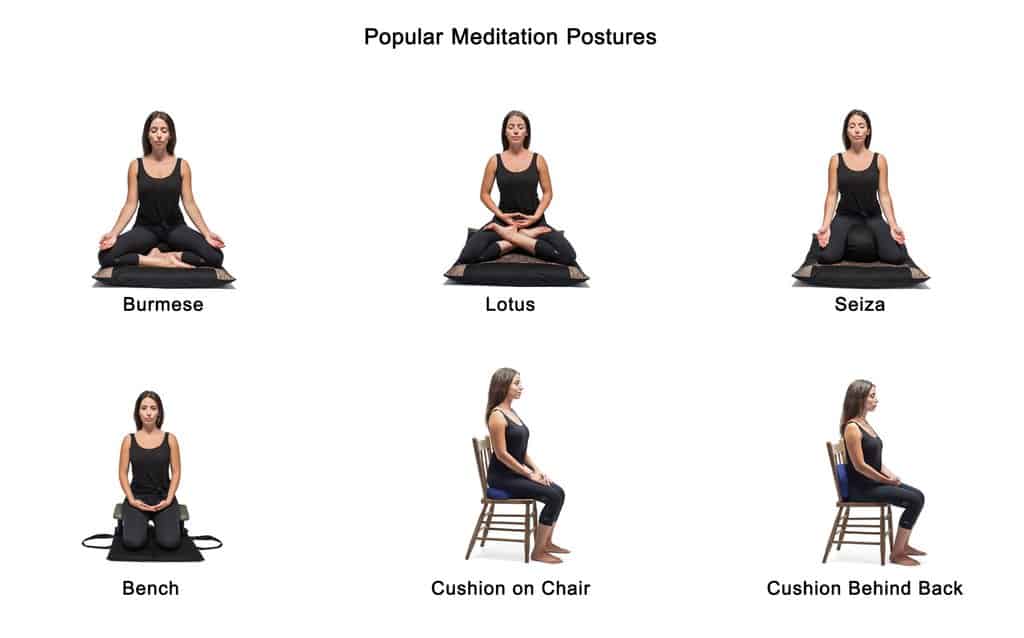
Usually it is practiced in a seated position (see chart below) but walking meditation is just as good.

What are the benefits of meditation?

There are numerous benefits of meditating regularly. It helps us to live our lives better, it lowers stress levels, increases wellbeing, reduces blood pressure, improves our health and it assists with self-realisation.

Meditation helps to even out the ups and downs of life, minimizes meltdowns.

Note: meditation might not suit people with mental health challenges.

How to start meditating?

Unless you prepare the body for meditation you will not be able to sit comfortably.

Try the following stretches with breath awareness:

  • Stand tall in the mountain pose: inhale raise the arms as high as you can comfortable then exhale lower the arms;
  • Stand tall in the mountain pose: inhale raise arms above the head and come up on your toes;
  • Stand tall, inhale raise the arms and exhale, pivoting from your hips bend forward. 
  • Do some twists of the spine, either standing or sitting.

When you are ready to start meditating find a quiet spot, be warm.  A symmetrical seated pose is recommended as the spine is elongated, lungs can work efficiently, the energy rises in the body.  Have support under your knees and hands. Please note my main photo is is taken in Bhutan and it is more about the landscape than sustainable posture for meditation.

If you choose walking meditation find a familiar area, beach or grass in your backyard or local park. Set a reminder (say five or ten minutes) and when that time is up start walking back to your starting point.

If laying down one might fall asleep – which is also beneficial but is is called a nap not meditation :).

In yoga, unless the nose is blocked, we inhale and exhale through the nostrils. 

Once you are seated and comfortable start observing your breath, the length of your inhalation and exhalation.  Try to count for four as you inhale and for four as you exhale.  If you have some experience in Breath Control (Pranayama) you might add pauses after the inhalation and after the exhalation, so your count will be 4:4:4:4.

During meditation:

Accept that it is hard to steady the mind.  Meditation is going inwards, might not be pleasant.  It is self-discovery.  Keep your attention your breath. 

In Meditation you remain in the Waking state of consciousness (low frequency Beta and Alpha brain wave patterns) and gently focus the mind while allowing thought patterns, emotions, sensations and images to arise and go on.  Gradually allowing the layers of the unconscious and subconscious to come forward, expanding the Waking state with one-pointed concentration and non-attachment to the streams of impressions flowing, visualization, memory, learning and concentration in the field of mind. 

If your mind was wondering during meditation, it does not mean that you had a bad meditation. 

What is stopping you from meditating?

A lot of people think they do not have the time or place to meditate, or it is too hard.  Initially start with five or ten minutes per day and gradually increase the time to 20 minutes.

You might want to try some guided mediations (apps) to start it.

Enjoy the inner piece and the process of quieting the busy, chattering mind.

AUM